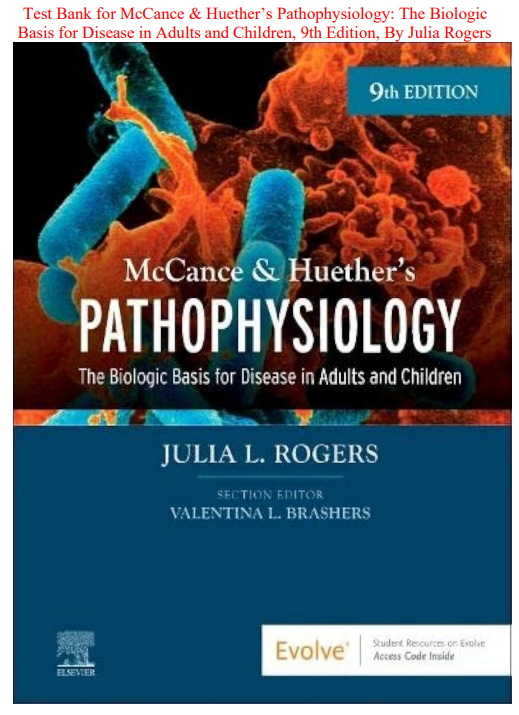
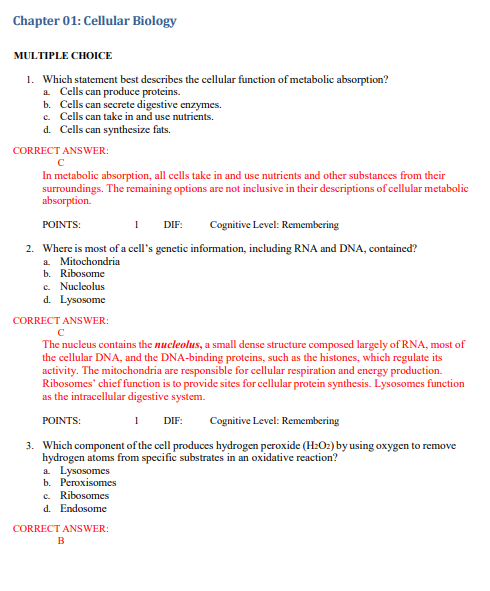
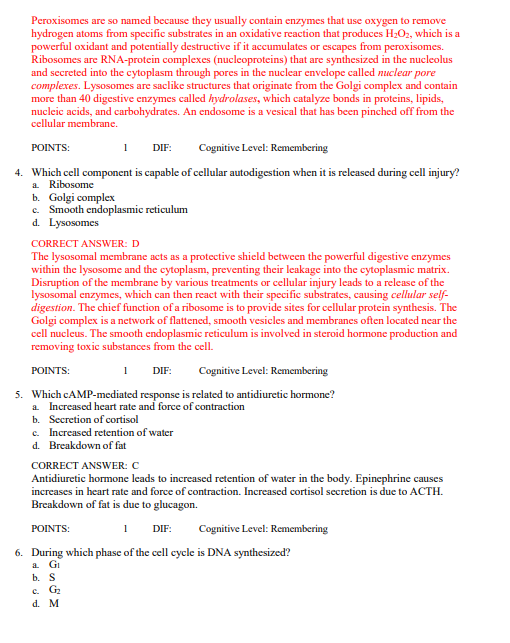
The Test Bank for McCance & Huether’s Pathophysiology: The Biologic Basis for Disease in Adults and Children, 9th Edition by Julia Rogers is a trusted academic companion for nursing, medical, and allied health students. Based on the authoritative textbook, this test bank provides comprehensive exam preparation through carefully designed practice questions and detailed rationales.
Pathophysiology is one of the most challenging subjects in healthcare education, requiring students to integrate biology, anatomy, physiology, and clinical knowledge to understand how diseases develop and progress. The 9th edition test bank supports this learning journey by offering realistic exam-style questions that align with the most up-to-date pathophysiology content, ensuring students are well-prepared for exams and clinical practice.
Why This Test Bank Is Essential
Studying pathophysiology often feels overwhelming due to the depth and breadth of information. This test bank transforms learning into an organized, manageable, and interactive process. It ensures students go beyond memorization to truly grasp disease mechanisms, clinical signs, and outcomes.
Key Advantages:
-
Comprehensive Coverage: Questions span every chapter of the textbook, from cellular biology and genetics to system-specific pathologies.
-
Multiple Exam Formats: Includes multiple-choice, multiple response, true/false, short-answer, and case-based scenario questions.
-
Clinical Focus: Many questions simulate real-world patient cases, encouraging critical thinking and decision-making.
-
Detailed Rationales: Each answer is explained, helping learners understand not just what is correct, but why.
-
NGN Exam Prep: Next Generation NCLEX (NGN)-style items are included, giving nursing students early exposure to case-based questions and clinical judgment tasks.
-
Educator-Friendly: Instructors can use the bank to build quizzes, exams, and assignments without writing questions from scratch.
Features of the Test Bank
1. Chapter-Specific Alignment
The test bank mirrors the structure of the textbook. Students can practice chapter by chapter, such as:
-
Cellular biology, stress, and adaptation.
-
Genetic mechanisms and disorders.
-
Immunity and inflammation.
-
Cancer biology and tumor progression.
-
Cardiovascular, respiratory, renal, gastrointestinal, endocrine, and neurological pathologies.
-
Pediatric pathophysiology, including congenital disorders.
2. Variety of Question Types
-
MCQs for quick recall.
-
Multiple Response questions to test deeper understanding.
-
Case Studies presenting real-life clinical vignettes.
-
Matching and Fill-in-the-Blank to reinforce terminology and concepts.
3. Clinical Relevance
Rather than simply testing recall, many questions emphasize applied knowledge. For instance, a patient case may describe lab values, symptoms, and history, and students must identify the likely pathophysiologic mechanism.
4. Focus on Children and Adults
True to the textbook’s design, the test bank covers both adult and pediatric conditions, ensuring learners gain comprehensive insight into disease processes across the lifespan.
Benefits for Students
-
Master Complex Content
Pathophysiology can feel daunting, but repeated practice simplifies complex mechanisms, making them easier to remember. -
Boost Exam Confidence
By working through hundreds of practice questions, students feel more comfortable with test formats and expectations. -
Learn Actively
Answering questions requires active recall, which is proven to improve memory retention compared to passive reading. -
Develop Critical Thinking
With scenario-based and NGN-style questions, students learn how to apply theory to clinical situations. -
Identify Weak Areas
Chapter-specific practice allows students to focus study time where they need it most.
Benefits for Educators
-
Saves Time: Ready-to-use, peer-reviewed questions eliminate the need for writing exam content from scratch.
-
Customizable: Instructors can tailor quizzes or exams to fit course objectives.
-
Reliable Assessment: Questions align with textbook content and current clinical standards.
-
Supports Student Success: Rationales ensure students not only know the correct answer but understand the reasoning behind it.
Who Should Use This Test Bank?
-
Nursing Students preparing for exams or NCLEX licensure.
-
Medical Students requiring mastery of pathophysiology concepts.
-
Physician Assistant and Allied Health Students needing practice with disease mechanisms.
-
Graduate Students in advanced practice programs such as nurse practitioner (NP) or DNP tracks.
-
Educators seeking high-quality exam resources for lectures, assignments, and assessments.
Topics Covered in the Test Bank
-
Cellular Biology & Adaptation: Injury, death, repair, and adaptation mechanisms.
-
Genetics & Inheritance: DNA, mutations, and genetic diseases.
-
Immunity & Inflammation: Innate and adaptive responses, hypersensitivity, autoimmune diseases.
-
Neoplasia: Tumor biology, cancer progression, and metastasis.
-
Cardiovascular Pathology: Hypertension, atherosclerosis, heart failure, congenital heart disease.
-
Respiratory Disorders: COPD, asthma, pneumonia, and ARDS.
-
Renal & Urinary Pathology: Glomerulonephritis, renal failure, UTIs.
-
Endocrine Disorders: Diabetes mellitus, thyroid disease, adrenal disorders.
-
Neurological Pathophysiology: Stroke, seizures, neurodegenerative diseases.
-
Pediatric Considerations: Genetic disorders, congenital anomalies, pediatric cancers.
Sample Question Types
-
MCQ: “Which electrolyte imbalance is most likely in a patient with chronic renal failure?”
-
Case Study: “A 6-year-old presents with recurrent infections and poor wound healing. Which immunologic mechanism is most likely impaired?”
-
Multiple Response: “Select all that apply: Pathophysiological mechanisms of heart failure.”
-
True/False: “In type II diabetes, insulin resistance develops primarily at the cellular receptor level.”
Why the 9th Edition Stands Out
This edition incorporates the most current scientific evidence and clinical guidelines. Highlights include:
-
Updated disease classifications and terminology.
-
Expanded pediatric coverage.
-
Integration of genomics and precision medicine.
-
Enhanced clinical focus to prepare students for real-world care.
How This Test Bank Prepares You for the Future
Healthcare professionals must understand not only what diseases are but how they develop and affect the body. By using this test bank, students gain:
-
A solid foundation in disease mechanisms.
-
Exam readiness for course tests and licensing boards.
-
The ability to connect pathophysiology with patient symptoms and treatment decisions.
-
Confidence in transitioning from theory to clinical practice.
Conclusion
The Test Bank for McCance & Huether’s Pathophysiology: The Biologic Basis for Disease in Adults and Children, 9th Edition by Julia Rogers is more than a study aid—it’s a comprehensive learning system. With its chapter-by-chapter alignment, multiple question formats, rationales, and clinical focus, it supports both students and educators in mastering one of the most complex yet vital areas of healthcare education.
Whether you are a nursing student preparing for NCLEX, a medical student seeking mastery of disease processes, or an educator designing assessments, this test bank is a vital resource. It equips learners with the knowledge, reasoning skills, and confidence to succeed academically and professionally.


Reviews
There are no reviews yet.