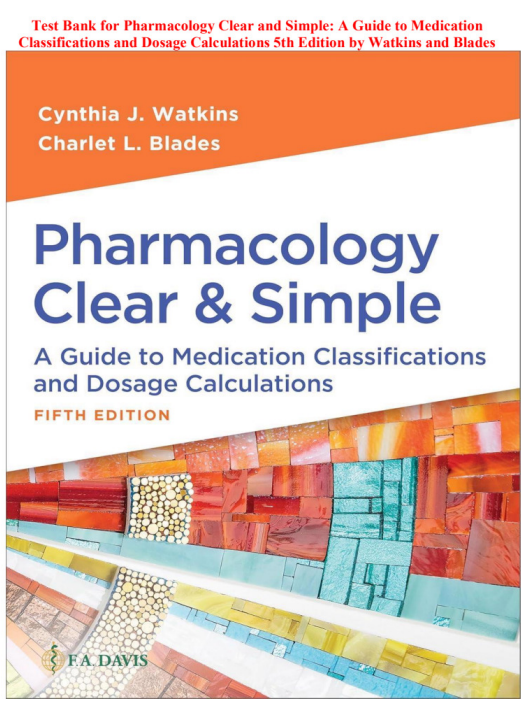
Pharmacology trips up a lot of nursing students, and it’s easy to see why. There are hundreds of medications to know, dosage math that has to be exact, and classifications that all start to blur together after a while. Pharmacology Clear and Simple: A Guide to Medication Classifications and Dosage Calculations, 5th Edition by Watkins and Blades was written to make that easier, breaking things down by classification instead of drowning students in individual drug names.
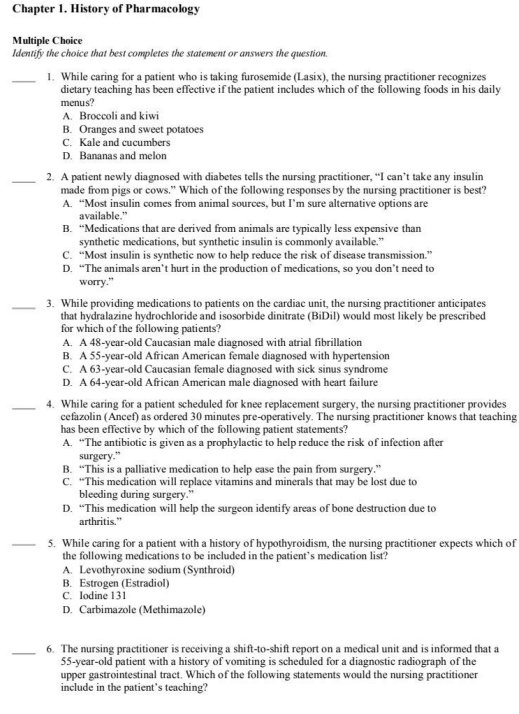
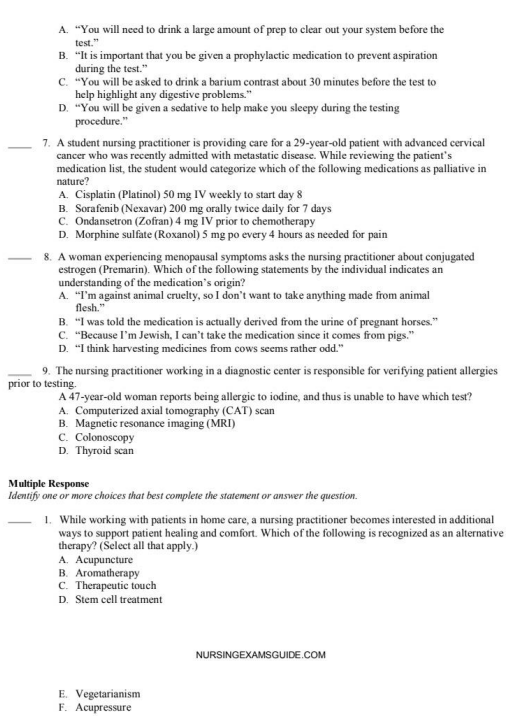
This test bank was built to match that same approach. It’s not a random list of drug trivia. It’s organized by classification and calculation type, the same way the textbook teaches it. You get realistic questions, correct answers, and rationales that explain the reasoning behind every answer, including the math.
If pharmacology has ever felt like too many names and numbers to keep straight, this kind of focused practice helps it click.
What Is a Test Bank?
A test bank is a large set of practice questions built around a specific textbook. The questions follow the same chapters, drug classifications, and calculation methods covered in the book. Instructors often use test banks like this one to help build their exams, so practicing with it gives you a real sense of what your test might actually look like.
It’s not a shortcut around studying. It’s a way to practice with material that matches your course.
Why Students Use This Test Bank
Pharmacology courses ask you to memorize a lot, but they also ask you to calculate accurately under pressure. Getting a dosage question wrong on an exam is one thing. Getting it wrong with a real patient is another. This test bank helps you build both knowledge and accuracy before it counts.
Here’s what you get:
- Full coverage of major drug classifications from the 5th edition
- Dosage calculation and medication administration questions
- Complete answer keys
- Rationales that explain the correct and incorrect choices, including the math
- Questions written the way real pharmacology exams are structured
Instead of memorizing drug names in isolation, you get practice that reinforces classification patterns and calculation skills together.
Topics Covered
This test bank follows the structure of the textbook and covers key areas, including:
- Principles of pharmacology and drug administration
- Dosage calculations and conversions
- Cardiovascular medications
- Respiratory medications
- Central nervous system medications
- Pain medications and anesthetics
- Antibiotics and anti-infectives
- Endocrine and diabetes medications
- Gastrointestinal medications
- Psychiatric medications
- Medications for the renal and urinary system
- Chemotherapy and cancer treatment medications
- Pediatric and geriatric dosage considerations
- Medication safety and error prevention
Every major classification and calculation type from the book is represented, so you can study in the same order your course follows.
Sample Questions from the Test Bank
Here are five sample questions so you can see the format and style. Each one includes the correct answer and a rationale.
Question 1
A provider orders 500 mg of a medication. The medication is available in 250 mg tablets. How many tablets should the nurse administer?
A. 1 tablet
B. 1.5 tablets
C. 2 tablets
D. 2.5 tablets
Correct Answer: C
Rationale: Divide the ordered dose by the dose on hand: 500 mg ÷ 250 mg = 2 tablets. Getting this kind of calculation right matters, since giving too much or too little medication can seriously harm a patient.
Question 2
Which classification of medication is most likely to be prescribed to lower blood pressure by blocking calcium entry into cardiac and vascular smooth muscle cells?
A. Beta blockers
B. ACE inhibitors
C. Calcium channel blockers
D. Diuretics
Correct Answer: C
Rationale: Calcium channel blockers work by preventing calcium from entering muscle cells in the heart and blood vessels, which relaxes them and lowers blood pressure. Beta blockers, ACE inhibitors, and diuretics all lower blood pressure too, but through different mechanisms.
Question 3
A patient is prescribed an IV infusion of 1,000 mL to run over 8 hours. What is the correct infusion rate in mL per hour?
A. 100 mL/hr
B. 125 mL/hr
C. 150 mL/hr
D. 200 mL/hr
Correct Answer: B
Rationale: Divide the total volume by the total time: 1,000 mL ÷ 8 hours = 125 mL/hr. IV rate calculations like this are common in pharmacology courses and on the job, so getting comfortable with the math matters.
Question 4
Which medication classification carries the highest risk of respiratory depression when taken in excess?
A. Antihistamines
B. Opioid analgesics
C. Antacids
D. Antipyretics
Correct Answer: B
Rationale: Opioid analgesics slow down the central nervous system, and in excess, this can suppress breathing to a dangerous level. Antihistamines, antacids, and antipyretics don’t carry this same risk of respiratory depression.
Question 5
A nurse is preparing to administer a medication that requires a loading dose followed by a maintenance dose. What is the purpose of the loading dose?
A. To reduce the total amount of medication needed
B. To quickly reach a therapeutic drug level in the blood
C. To prevent side effects from occurring
D. To replace the need for a maintenance dose
Correct Answer: B
Rationale: A loading dose is a larger initial dose given to bring the drug to a therapeutic level in the blood quickly, rather than waiting for it to build up gradually. The maintenance dose then keeps that level steady. A loading dose doesn’t reduce total medication needed or prevent side effects on its own.
Why This Test Bank Actually Helps You Learn
Pharmacology isn’t just about memorizing drug names. It’s about recognizing patterns within classifications and applying math correctly under pressure. Once you understand how one calcium channel blocker works, for example, you understand a lot about the whole class.
That’s why every rationale in this test bank explains the reasoning behind the answer, including the math when it applies. Understanding the “why” helps you recognize patterns across classifications instead of trying to memorize hundreds of drugs one at a time.
Who This Test Bank Is For
This resource works well for:
- Students currently using the 5th edition of Pharmacology Clear and Simple
- Nursing students taking a pharmacology or dosage calculation course
- Students preparing for midterms, finals, or the NCLEX
- Instructors building quizzes or practice exams
- Study groups reviewing medication classifications together
Whatever your study style, repetition, calculation practice, or working through the reasoning yourself, this test bank fits right into your routine.
How to Use This Test Bank Effectively
A few simple habits make a real difference:
- Study one classification or calculation type at a time.
- Try to answer each question, including the math, before checking the key.
- Read every rationale, even for questions you get right.
- Revisit calculations or classifications that gave you trouble a few days later.
- Pair this with your textbook and class notes, not as a replacement for them.
Steady, spaced-out practice works better than cramming the night before, especially with math-based content.
Instant Access, No Waiting
Once you complete your purchase, you get instant access to the full test bank. No shipping, no waiting around. You can start studying right away.
FAQs
Is this test bank the same as the textbook?
No. This is a supplemental study resource meant to be used alongside Pharmacology Clear and Simple, 5th Edition, not in place of it.
Does this cover dosage calculations too?
Yes. The test bank includes both classification-based questions and dosage calculation practice, matching the structure of the textbook.
Are answers and rationales included?
Yes. Every question comes with the correct answer and a clear explanation of the reasoning behind it, including the math for calculation questions.
Is this test bank useful for NCLEX prep?
Yes. The questions cover medication classifications and calculations, both of which are heavily tested on the NCLEX.
Will I get instant access after purchase?
Yes. Access is available right after checkout, with no physical shipping involved.
Can instructors use this too?
Yes. Instructors often use test banks like this one to build quizzes or extra practice material for students.
Is this a one-time purchase?
Yes. You pay once and get full access to the material.
What if I only need help with certain classifications or calculations?
The test bank is organized by topic, so you can go straight to the section you need.
Final Thoughts
Pharmacology comes down to two things: knowing your classifications and getting the math right. This test bank for Pharmacology Clear and Simple, 5th Edition is built to help you strengthen both. Real questions, honest rationales, and practice that builds true confidence with medications and calculations.
Study with purpose. Walk into your exam ready.


Reviews
There are no reviews yet.