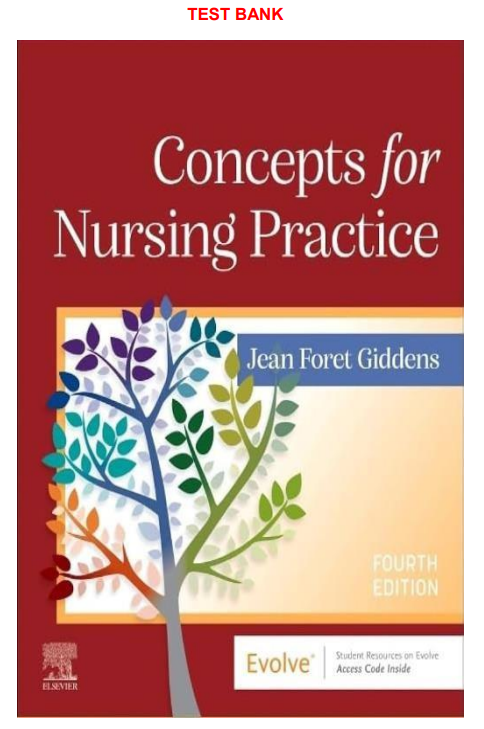
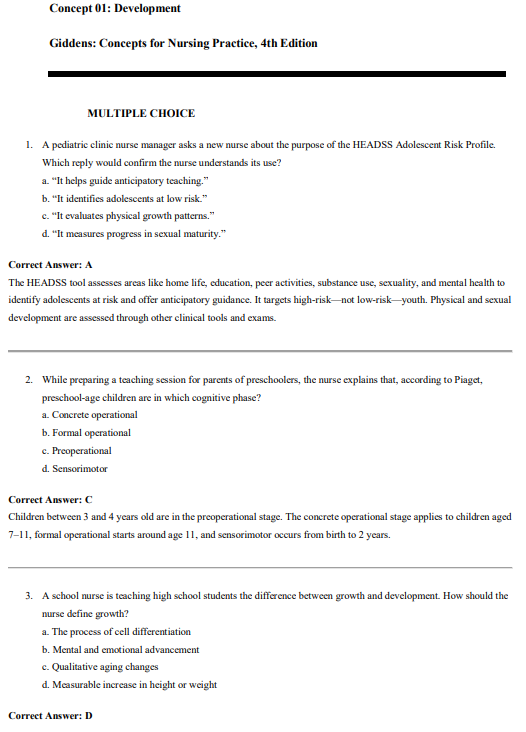
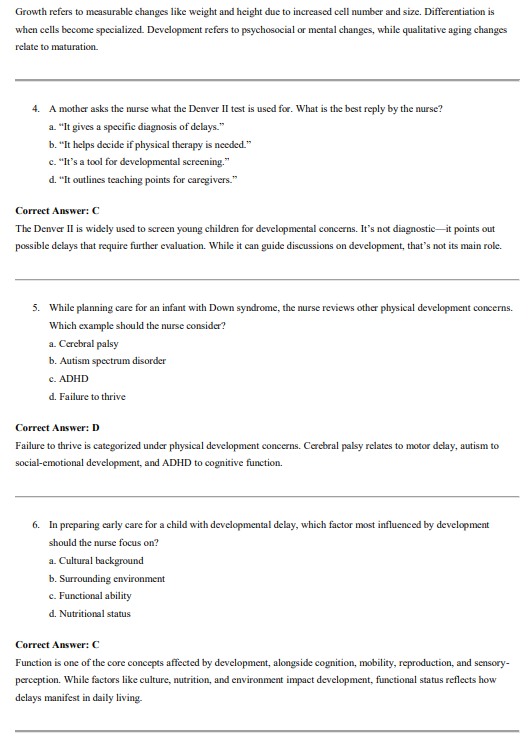
Concept-based nursing courses are a different kind of hard. You’re not just memorizing facts. You’re learning to connect ideas across body systems, patient situations, and clinical settings. That’s exactly what Jean Giddens’ Concepts for Nursing Practice, 4th Edition is built around, and it’s why so many nursing programs use it.
This test bank was made to match that concept-based approach. It’s not a random pile of trivia questions. Each one is written to test how well you understand a concept, not just whether you memorized a definition. You get real practice, clear answers, and rationales that explain the reasoning behind each one.
If you’re trying to build true clinical judgment, not just pass a quiz, this is the kind of practice that actually helps.
What Is a Test Bank?
A test bank is a large collection of practice questions tied to a specific textbook. These questions are written around the same concepts, exemplars, and case examples found in the book. Instructors often pull from resources like this when building exams, so practicing with a test bank gives you a real sense of what your exam might look like.
It’s not a shortcut. It’s a way to prepare with the right kind of material instead of guessing what to study.
Why This Book Is Different (and Why the Test Bank Matches It)
Concepts for Nursing Practice doesn’t organize itself by body system or disease. It organizes itself by concept. Things like perfusion, gas exchange, mobility, clinical judgment, and health disparities. Then it applies each concept across multiple patient situations.
That structure means your exams probably won’t ask simple recall questions. They’ll ask you to apply a concept to a scenario. This test bank was built with that in mind. Every question is written to test application and reasoning, the same way Giddens’ textbook teaches it.
Why Students Use This Test Bank
Nursing students don’t have extra hours in the day. Between clinical rotations, skills labs, and reading assignments, sitting down to build your own practice questions just isn’t realistic. This test bank does that work for you.
Here’s what you get:
- Coverage of major concepts from the 4th edition
- Multiple choice and scenario-based questions
- Full answer keys
- Rationales that explain both the right and wrong choices
- A format that mirrors real concept-based nursing exams
Instead of flipping through chapters trying to guess what might be tested, you get focused, organized practice.
Concepts Covered
This test bank follows the concept groups used in the textbook, including:
- Health, wellness, and illness
- Homeostasis and regulation
- Perfusion and gas exchange
- Fluid and electrolyte balance
- Nutrition and elimination
- Mobility and tissue integrity
- Cognition and sensory perception
- Stress and coping
- Culture, diversity, and health disparities
- Clinical judgment and clinical decision-making
- Safety and quality improvement
- Ethics and health policy
- Care coordination and collaboration
Every major concept from the book is represented, so you can study in the same structure your course follows.
Sample Questions from the Test Bank
Here are five sample questions so you can see how they’re written. Each one includes the correct answer and a rationale, the same way the full test bank does.
Question 1
A patient with heart failure develops shortness of breath and swelling in the legs. Which concept is most directly affected in this situation?
A. Mobility
B. Perfusion
C. Cognition
D. Elimination
Correct Answer: B
Rationale: Heart failure affects the heart’s ability to pump blood effectively, which directly impacts perfusion. Poor perfusion leads to fluid buildup, causing symptoms like shortness of breath and leg swelling. Mobility, cognition, and elimination may be affected later, but perfusion is the core concept involved here.
Question 2
A nurse is using clinical judgment to decide how to respond to a change in a patient’s condition. Which action best reflects this process?
A. Following the same care plan without changes
B. Gathering new data and reassessing before acting
C. Waiting for the next shift to make a decision
D. Asking the patient to decide what to do next
Correct Answer: B
Rationale: Clinical judgment involves recognizing a change, gathering more information, and reassessing the situation before taking action. This process helps nurses make safe, informed decisions. Option A ignores the change. Option C delays needed care. Option D shifts a clinical decision onto the patient instead of using nursing judgment.
Question 3
Which patient is most at risk for impaired gas exchange?
A. A patient recovering from a broken arm
B. A patient with pneumonia
C. A patient with a urinary tract infection
D. A patient with mild seasonal allergies
Correct Answer: B
Rationale: Pneumonia causes inflammation and fluid in the lungs, which directly interferes with the exchange of oxygen and carbon dioxide. A broken arm, a urinary tract infection, and mild allergies don’t typically affect the lungs in the same direct way.
Question 4
A nurse is caring for a patient from a different cultural background who declines a recommended treatment. What is the nurse’s best response?
A. Insist that the patient follow the treatment plan
B. Document the refusal and avoid further discussion
C. Explore the patient’s beliefs and concerns about the treatment
D. Ask a family member to convince the patient
Correct Answer: C
Rationale: Respecting cultural beliefs while still providing safe care means understanding the patient’s perspective first. Exploring their concerns opens the door to a conversation, not a conflict. Insisting, ignoring the refusal, or involving family without the patient’s input can damage trust and isn’t patient-centered care.
Question 5
A patient reports feeling overwhelmed after a new diagnosis. Which concept does this situation relate to most closely?
A. Tissue integrity
B. Stress and coping
C. Elimination
D. Sensory perception
Correct Answer: B
Rationale: Feeling overwhelmed after a diagnosis is an emotional and psychological response, which falls under the concept of stress and coping. Nurses need to recognize these responses and support patients through them, separate from physical concepts like tissue integrity or elimination.
Why This Test Bank Actually Helps You Learn
A lot of students think studying just means getting the right answer. But concept-based nursing courses want more than that. They want you to explain why an answer is right, and why the others aren’t.
That’s exactly what the rationales in this test bank do. They walk you through the reasoning, not just the outcome. Over time, this kind of practice builds the same thinking pattern your exams (and your future patients) will need from you.
Who This Test Bank Is For
This resource works well for:
- Students currently using the 4th edition of Giddens’ textbook
- Students in concept-based nursing programs
- Students preparing for midterms, finals, or the NCLEX
- Instructors building quizzes or practice exams
- Study groups reviewing concepts together
Whether you learn best through repetition, application, or reasoning through scenarios, this test bank fits into your study routine.
How to Use This Test Bank Effectively
A few simple habits make a big difference:
- Study one concept group at a time instead of jumping around.
- Try to answer each question before checking the key.
- Read every rationale, even for questions you got right.
- Go back to concepts that gave you trouble a few days later.
- Pair this with your textbook and class notes, not as a replacement for them.
Steady practice over time works better than cramming the night before.
Instant Access, No Waiting
Once you complete your purchase, you get instant access to the full test bank. No shipping, no delays. You can start studying right away.
FAQs
Is this test bank the same as the textbook?
No. This is a supplemental study resource meant to be used alongside Concepts for Nursing Practice, 4th Edition, not in place of it.
Does this cover all the concepts in the book?
Yes. The test bank is organized around the same concept groups used in the 4th edition.
Are answers and rationales included?
Yes. Every question comes with the correct answer and an explanation of the reasoning behind it.
Is this test bank useful for NCLEX prep?
Yes. The questions focus on application and clinical judgment, which lines up closely with how NCLEX-style questions are written.
Will I get instant access after purchase?
Yes. You’ll have access right after checkout, with no physical shipping involved.
Can instructors use this too?
Yes. Instructors often use test banks like this one to build quizzes or extra practice material for students.
Is this a one-time purchase?
Yes. You pay once and get full access to the material.
What if I only need help with certain concepts?
The test bank is organized by concept group, so you can jump straight to the section you need.
Final Thoughts
Concept-based nursing courses ask you to think differently, not just memorize more. This test bank for Concepts for Nursing Practice, 4th Edition is built to match that kind of thinking. Clear questions, honest rationales, and practice that actually builds understanding.
Study with purpose. Walk into your exam ready to think like a nurse.


Reviews
There are no reviews yet.