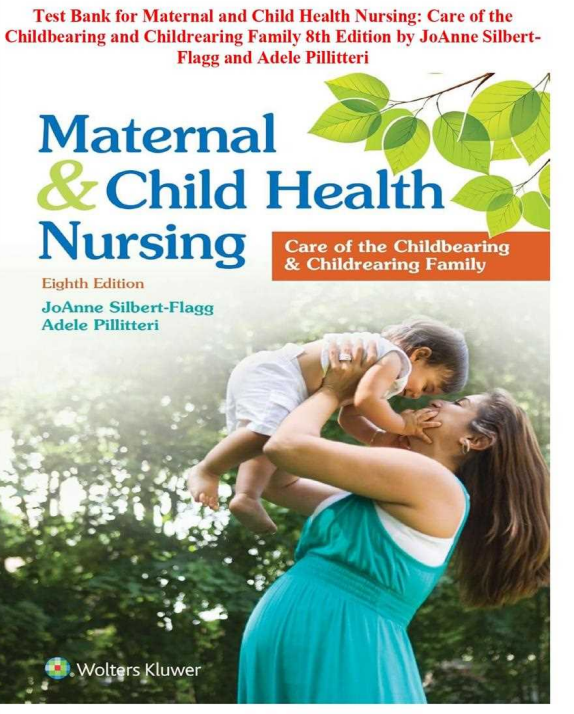
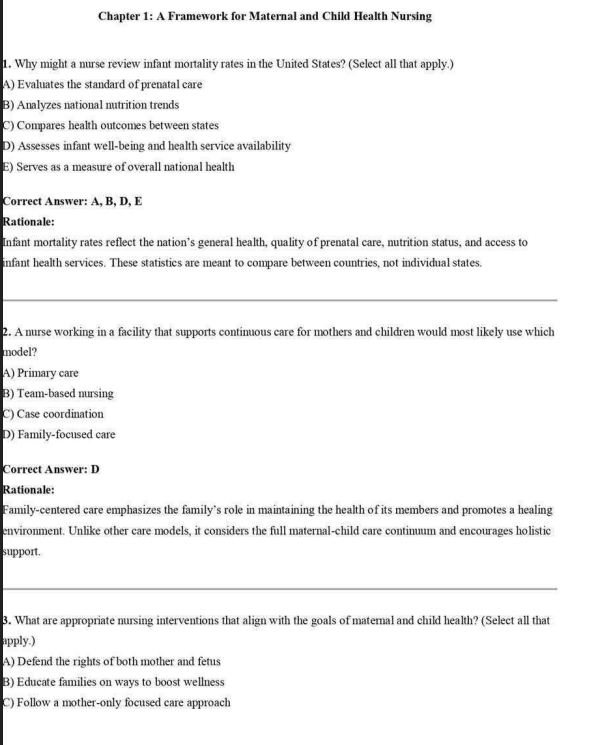
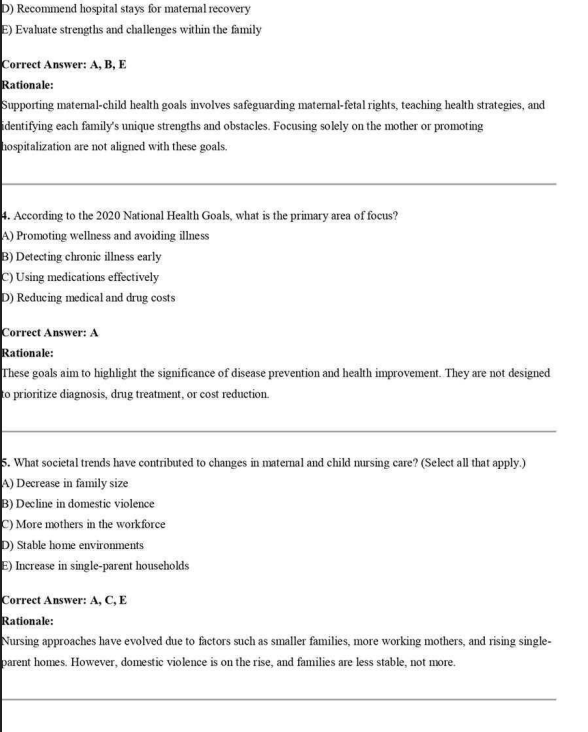
Maternal and child health nursing covers a huge stretch of life. Preconception, pregnancy, birth, the newborn period, childhood, and everything in between. Maternal and Child Health Nursing: Care of the Childbearing and Childrearing Family, 8th Edition by Silbert-Flagg and Pillitteri brings all of that together, which is why it’s one of the most widely used textbooks in this area of nursing.
This test bank was built to match that scope. It’s not a shallow set of fact-based questions. It’s written to test real clinical understanding, the kind you need for exams and for actual patient care. You get realistic questions, correct answers, and rationales that explain the reasoning behind each one.
If this course has ever felt like it covers too much ground to keep straight, this kind of focused practice helps organize it in your head.
What Is a Test Bank?
A test bank is a large set of practice questions built around a specific textbook. The questions follow the same chapters, developmental stages, and clinical situations covered in the book. Instructors often use test banks like this one to help build their exams, so practicing with it gives you a strong sense of what your test might actually include.
It’s not a way to skip studying. It’s a way to study smarter, with material that matches your course.
Why Students Use This Test Bank
This course moves through a lot of content, and it spans very different stages of life all in one class. Pregnancy complications, labor and delivery, newborn assessment, and pediatric growth and development can all show up on the same exam. This test bank helps you keep it all organized.
Here’s what you get:
- Full coverage of major topics from the 8th edition
- Multiple choice and scenario-based questions
- Complete answer keys
- Rationales that explain the correct and incorrect choices
- Questions written the way real maternal-child nursing exams are structured
Instead of trying to hold every stage of development in your head at once, you get organized practice that shows you exactly where to focus.
Topics Covered
This test bank follows the structure of the textbook and covers key areas, including:
- Preconception and genetic counseling
- Fetal development and prenatal care
- Complications of pregnancy
- Labor and birth
- Postpartum care and recovery
- Newborn assessment and care
- Breastfeeding and infant nutrition
- Growth and development across childhood
- Common childhood illnesses
- Pediatric pain and hospitalization
- Chronic illness and disability in children
- Family-centered care
- Safety and injury prevention in children
- Cultural considerations in maternal-child care
Every major stage and topic from the book is represented, so you can study in the same order your course follows.
Sample Questions from the Test Bank
Here are five sample questions so you can see the format and style. Each one includes the correct answer and a rationale.
Question 1
A newborn is assessed one minute after birth. The heart rate is 110, the baby is crying, has some flexion of the extremities, and grimaces with stimulation, and the body is pink with blue extremities. What is this newborn’s Apgar score?
A. 6
B. 7
C. 8
D. 9
Correct Answer: C
Rationale: Heart rate over 100 (2 points), crying/good respiratory effort (2 points), some flexion (1 point), grimace (1 point), and body pink with blue extremities (1 point) adds up to 8 points total. Apgar scoring is a quick way to check how well a newborn is adjusting right after birth.
Question 2
A pregnant patient at 28 weeks is diagnosed with gestational diabetes. Which statement by the patient shows a good understanding of her condition?
A. “I’ll need insulin for the rest of my life.”
B. “This means my baby will be born with diabetes too.”
C. “I’ll need to monitor my blood sugar and watch my diet during pregnancy.”
D. “This won’t affect my baby at all.”
Correct Answer: C
Rationale: Gestational diabetes is managed with blood sugar monitoring and dietary changes during pregnancy, and sometimes medication if needed. It usually resolves after birth, doesn’t mean the baby is born with diabetes, and can affect the baby’s growth if left unmanaged, so it isn’t something to dismiss.
Question 3
A toddler is brought to the clinic for a routine visit. Which developmental milestone would the nurse expect to see in a healthy 2-year-old?
A. Riding a bicycle without training wheels
B. Speaking in full paragraphs
C. Walking up stairs one step at a time while holding a rail
D. Reading simple words
Correct Answer: C
Rationale: By age 2, toddlers typically can walk up stairs one step at a time, often while holding onto a rail for support. Riding a bicycle, speaking in full paragraphs, and reading are all skills that develop later in childhood, not at this stage.
Question 4
A postpartum patient reports heavy vaginal bleeding and says she feels dizzy when standing up. What should the nurse do first?
A. Ask the patient to walk to the bathroom independently
B. Assess vital signs and the amount of bleeding immediately
C. Document the report and check again in an hour
D. Offer the patient something to eat
Correct Answer: B
Rationale: Heavy bleeding combined with dizziness could point to significant blood loss, which needs an immediate assessment of vital signs and bleeding amount. Waiting an hour or having the patient walk alone could put her at risk if she’s losing a dangerous amount of blood.
Question 5
A child is admitted with a diagnosis of asthma and is showing signs of respiratory distress. Which finding is most concerning to the nurse?
A. Mild wheezing on exhalation
B. A respiratory rate within normal limits
C. Use of accessory muscles and quiet breath sounds
D. A slightly elevated temperature
Correct Answer: C
Rationale: Quiet breath sounds combined with the use of accessory muscles can mean the child isn’t moving enough air to even produce a wheeze, which is a sign of severe respiratory distress. Mild wheezing and a normal respiratory rate are far less concerning, and a slight fever isn’t an airway emergency on its own.
Why This Test Bank Actually Helps You Learn
This course covers so many different stages of life that it’s easy to mix things up, especially under exam pressure. Knowing what’s normal at each stage, and recognizing when something isn’t, is the real skill being tested.
That’s why every rationale in this test bank walks through the reasoning, not just the correct answer. Understanding the “why” helps you tell apart similar-sounding conditions and recognize what actually matters in a patient scenario, whether that patient is a newborn, a toddler, or a laboring mother.
Who This Test Bank Is For
This resource works well for:
- Students currently using the 8th edition of Silbert-Flagg and Pillitteri’s textbook
- Nursing students in maternal-child or obstetric and pediatric nursing courses
- Students preparing for midterms, finals, or the NCLEX
- Instructors building quizzes or practice exams
- Study groups reviewing maternal and child health topics together
Whatever your study style, repetition, scenarios, or working through the reasoning yourself, this test bank fits right into your routine.
How to Use This Test Bank Effectively
A few simple habits make a real difference:
- Study one stage or topic area at a time.
- Try to answer each question before checking the key.
- Read every rationale, even for questions you get right.
- Revisit topics that gave you trouble a few days later.
- Pair this with your textbook and clinical notes, not as a replacement for them.
Steady, spaced-out practice works better than cramming the night before.
Instant Access, No Waiting
Once you complete your purchase, you get instant access to the full test bank. No shipping, no waiting around. You can start studying right away.
FAQs
Is this test bank the same as the textbook?
No. This is a supplemental study resource meant to be used alongside Maternal and Child Health Nursing, 8th Edition, not in place of it.
Does this cover both maternal and pediatric topics?
Yes. The test bank follows the full scope of the textbook, covering pregnancy, birth, newborn care, and childhood development and illness.
Are answers and rationales included?
Yes. Every question comes with the correct answer and a clear explanation of the reasoning behind it.
Is this test bank useful for NCLEX prep?
Yes. The questions focus on clinical reasoning and prioritization, which lines up closely with how NCLEX-style maternal-child questions are written.
Will I get instant access after purchase?
Yes. Access is available right after checkout, with no physical shipping involved.
Can instructors use this too?
Yes. Instructors often use test banks like this one to build quizzes or extra practice material for students.
Is this a one-time purchase?
Yes. You pay once and get full access to the material.
What if I only need help with certain topics?
The test bank is organized by chapter, so you can go straight to the section you need.
Final Thoughts
Maternal and child health nursing covers a wide stretch of life, but it all comes back to understanding what’s normal and recognizing when something isn’t. This test bank for Maternal and Child Health Nursing, 8th Edition is built to help you see that clearly. Real questions, honest rationales, and practice that builds true clinical confidence.
Study with purpose. Walk into your exam ready.


Reviews
There are no reviews yet.