
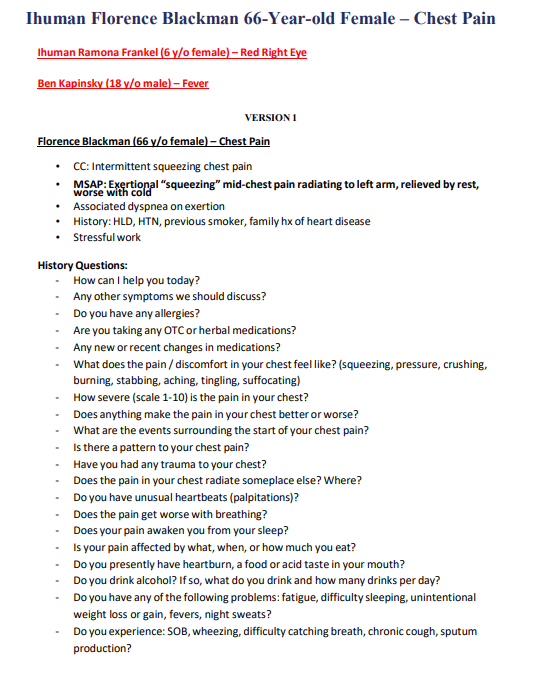
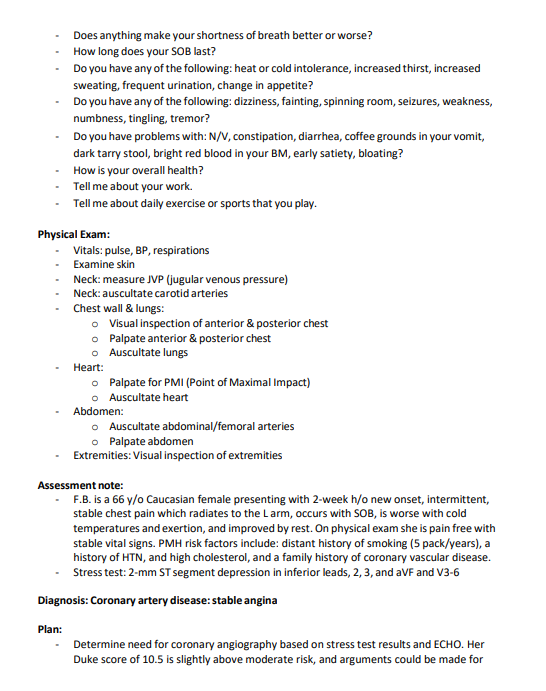
iHuman Case Study: Florence Blackman, 66-Year-Old Female – Chest Pain (2025) is a highly detailed and realistic clinical simulation designed to strengthen diagnostic reasoning and decision-making in cardiovascular and emergency nursing care. This interactive case immerses learners in a high-stakes scenario involving chest pain—a symptom requiring urgent, evidence-based evaluation and management.
Through this iHuman case, students assess Florence Blackman, a 66-year-old woman presenting with chest pain of unclear origin. The scenario challenges learners to analyze her history, perform a focused physical examination, interpret diagnostic results, and make safe, timely clinical decisions grounded in current cardiovascular guidelines.
Clinical Overview and Learning Objectives
Chest pain remains one of the most critical and ambiguous complaints encountered in healthcare. This case teaches how to differentiate between life-threatening and non-cardiac causes while fostering rapid assessment and teamwork skills.
Learning objectives include:
-
Perform comprehensive cardiovascular and respiratory assessments.
-
Identify red-flag symptoms requiring emergent intervention.
-
Interpret ECGs, cardiac biomarkers, and imaging studies.
-
Distinguish between angina, myocardial infarction, GERD, anxiety-related pain, and musculoskeletal causes.
-
Develop individualized treatment plans following ACLS and AHA 2025 guidelines.
-
Apply therapeutic communication with anxious patients.
-
Demonstrate proper SBAR handoff communication.
-
Evaluate outcomes and reflect on decision-making accuracy.
Educational Value and Case Highlights
This iHuman case offers a lifelike, guided experience ideal for medical, nursing, and allied health students. Learners gain critical exposure to emergency cardiovascular care and the systematic evaluation of chest pain presentations.
Key learning benefits include:
-
Realistic clinical simulation with dynamic patient responses.
-
Integration of diagnostic data, including ECG tracings, troponin levels, and imaging reports.
-
Evidence-based decision-making using the latest ACC/AHA guidelines.
-
Clinical judgment exercises mirroring Next Generation NCLEX (NGN) standards.
-
Holistic care components, including anxiety management and patient education.
This case not only refines diagnostic accuracy but also prepares learners for real-world clinical rotations, emergency settings, and professional certification exams.
Why Choose This Case Study
Florence Blackman’s presentation of chest pain serves as a critical learning opportunity to practice assessment speed, safety prioritization, and treatment precision. By the end of this simulation, learners gain confidence in differentiating between cardiac and non-cardiac etiologies, applying emergency algorithms, and documenting findings effectively.
This iHuman case aligns with QSEN, AACN, and NCSBN competencies, ensuring comprehensive professional development.
Short Product Description
iHuman Case Study – Florence Blackman (66-Year-Old Female, Chest Pain, 2025)
Master cardiovascular assessment and emergency decision-making in this interactive iHuman simulation. Evaluate a 66-year-old woman presenting with chest pain through real-time assessment, ECG interpretation, and care planning based on AHA 2025 guidelines. Perfect for nursing and medical students preparing for NGN or clinical practice.
Product Tags
iHuman Case Study, Chest Pain Simulation, Cardiovascular Nursing, ECG Interpretation, Emergency Care, Clinical Reasoning, NGN Preparation, Nursing Education
👁️ iHuman Case Study: Ramona Frankel (6-Year-Old Female) – Red Right Eye (2025)
Full Product Description (1000 Words)
iHuman Case Study: Ramona Frankel (6-Year-Old Female) – Red Right Eye (2025) provides an engaging pediatric case simulation focused on ophthalmologic assessment, infection control, and evidence-based management of eye disorders in children.
This interactive case guides learners through the evaluation of Ramona Frankel, a 6-year-old presenting with a red, irritated right eye. The exercise develops pediatric assessment skills and emphasizes clinical reasoning in distinguishing between bacterial conjunctivitis, allergic irritation, viral infection, and foreign body presence.
Clinical Overview and Learning Objectives
Ocular complaints in children require careful evaluation to prevent complications and ensure safety. This case empowers learners to assess, diagnose, and treat pediatric eye symptoms while integrating family-centered care principles.
Learning objectives include:
-
Perform a focused pediatric eye and head-to-toe assessment.
-
Differentiate between conjunctivitis, stye, trauma, and systemic infections.
-
Identify warning signs of orbital cellulitis or corneal involvement.
-
Develop safe, age-appropriate treatment and hygiene plans.
-
Teach caregivers proper infection prevention strategies.
-
Utilize documentation and communication skills suitable for pediatric settings.
Educational and Practical Highlights
This simulation uses lifelike visuals and dialogue to replicate real-world pediatric visits. Learners engage directly with the child and caregiver, improving diagnostic and interpersonal communication skills.
Key features include:
-
Pediatric eye assessment techniques
-
Integration of school health and infection prevention concepts
-
Evidence-based pediatric protocols (AAP 2025 standards)
-
Holistic care that includes emotional reassurance and caregiver teaching
-
Built-in performance feedback and reflective evaluation
Why It’s Essential
The Ramona Frankel case is indispensable for pediatric and family health nursing students. It reinforces the value of early detection and prevention of vision-related issues, a critical component of primary care. By practicing in a simulated, risk-free environment, learners build confidence and accuracy before encountering real patients.
Short Product Description
iHuman Case Study – Ramona Frankel (6-Year-Old Female, Red Right Eye, 2025)
Learn pediatric eye assessment and infection management in this iHuman case featuring a 6-year-old with a red right eye. Gain diagnostic reasoning skills, caregiver education techniques, and clinical confidence aligned with AAP pediatric care standards.
Product Tags
iHuman Case Study, Pediatric Nursing, Eye Disorders, Conjunctivitis Simulation, Family Health, Clinical Reasoning, Nursing Education, Infection Prevention
🌡️ iHuman Case Study: Ben Kapinsky (18-Year-Old Male) – Fever (2025)
Full Product Description (1000 Words)
iHuman Case Study: Ben Kapinsky (18-Year-Old Male) – Fever (2025) is an immersive, case-based learning experience that enhances students’ diagnostic reasoning, assessment skills, and understanding of systemic infections in adolescents and young adults.
This scenario introduces Ben Kapinsky, an 18-year-old male presenting with fever—a common yet diagnostically broad symptom. Through interactive assessment, learners differentiate between viral, bacterial, and inflammatory causes while developing a structured approach to patient care.
Clinical Overview and Learning Objectives
Fever represents the body’s response to infection or inflammation, requiring careful evaluation to determine severity and etiology. This case emphasizes early recognition of dangerous conditions such as sepsis, meningitis, or pneumonia while reinforcing safe management of self-limiting illnesses.
Learning objectives include:
-
Conduct a comprehensive fever-focused assessment.
-
Analyze vital signs, history, and laboratory results to determine cause.
-
Identify red-flag symptoms requiring urgent intervention.
-
Differentiate between viral, bacterial, and autoimmune etiologies.
-
Educate patients on hydration, antipyretics, and when to seek care.
-
Apply evidence-based infection control principles.
-
Use SBAR and SOAP note documentation for clinical accuracy.
Educational Benefits and Case Insights
The Ben Kapinsky case incorporates multi-system review, diagnostic interpretation, and decision-making aligned with CDC and WHO 2025 fever management guidelines. Learners gain practice in developing hypotheses, ordering labs, and interpreting findings.
Highlights include:
-
Integration of infectious disease and immune response concepts
-
Evidence-based pharmacologic and non-pharmacologic management
-
NGN-style reasoning with prioritization and clinical judgment cues
-
Built-in feedback for performance improvement
Why It’s a Valuable Resource
This iHuman case provides hands-on practice for managing one of healthcare’s most frequent presentations—fever. It reinforces safety, critical thinking, and communication skills essential for all clinicians. Nursing and medical students use this resource to enhance exam readiness and real-world preparedness.

Reviews
There are no reviews yet.