
Navigate Complex Ethical Dilemmas with Confidence and Clarity
Ethical decision-making separates competent helping professionals from exceptional ones. Your ability to recognize ethical dilemmas, analyze competing values, and choose defensible courses of action protects both clients and your professional license.
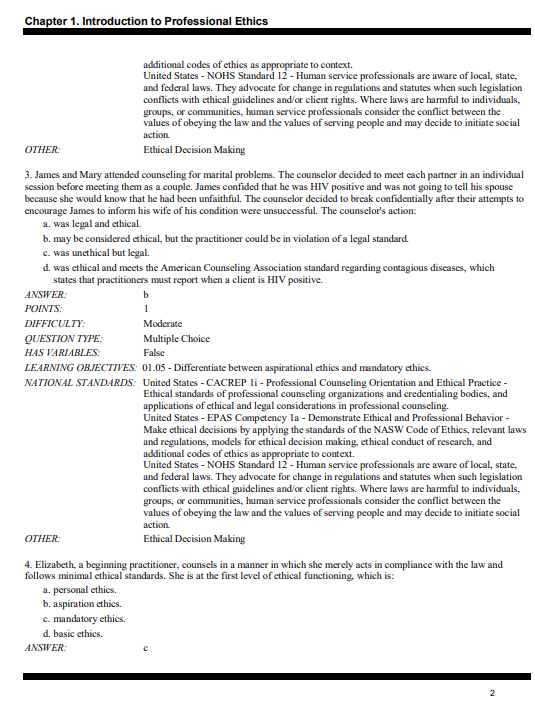
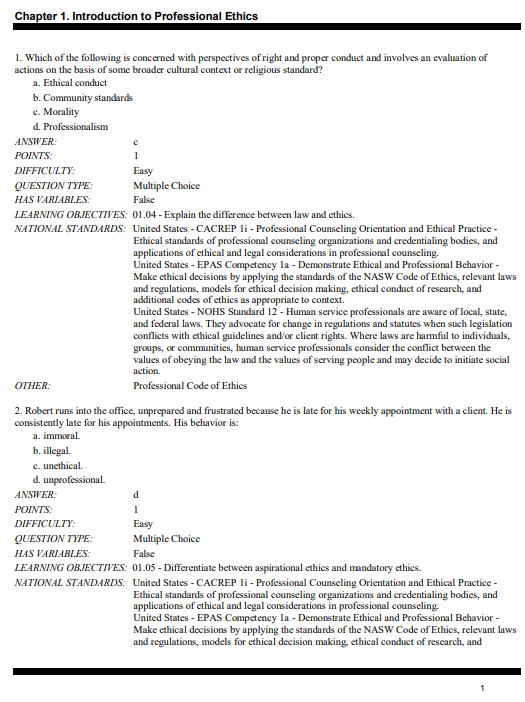
This test bank accompanies Issues and Ethics in the Helping Professions 11th Edition by Corey, Corey, Corey, and Callanan. It provides rigorous practice that develops the ethical reasoning skills essential for counselors, social workers, psychologists, and other helping professionals.
Stop feeling paralyzed by ethical gray areas. Start building the ethical decision-making framework that guides you through the most challenging professional situations.
Designed for All Helping Professions
Ethical principles transcend professional boundaries. Whether you’re studying counseling, social work, psychology, marriage and family therapy, or addiction counseling, ethical competence proves essential.
This test bank addresses ethics across helping professions. Questions apply to diverse practice settings from private practice to community agencies to hospitals.
You’ll develop ethical reasoning applicable throughout your career regardless of specialty or setting changes.
Essential Features for Ethical Excellence:
- Comprehensive ethical issues coverage
- Decision-making models and frameworks
- Professional codes and legal requirements
- Multicultural and diversity considerations
- Boundary and dual relationship navigation
- Confidentiality and privacy complexities
- Informed consent across situations
- Competence and scope of practice
- Values and ethics integration
- Questions supporting licensure preparation
Why Ethical Competence Determines Professional Success
Ethics violations destroy careers quickly. Complaints, lawsuits, and license revocations follow ethical lapses that seemed minor at the time.
These questions develop ethical vigilance. You’ll recognize potential violations before crossing boundaries. You’ll understand how small compromises lead to serious problems. You’ll make decisions you can defend to licensing boards.
This ethical awareness protects your livelihood and clients’ wellbeing simultaneously.
Comprehensive Ethical Issues Coverage
Helping professionals face countless ethical challenges from client suicidality to insurance fraud pressures. This test bank addresses the full spectrum.
Major Ethical Topics:
- Professional identity and values
- Ethical decision-making models
- Professional codes and standards
- Legal issues and malpractice
- Client rights and informed consent
- Confidentiality and privacy (including HIPAA)
- Managing boundaries and multiple relationships
- Competence and professional development
- Multicultural counseling ethics
- Technology and social media ethics
- Assessment and diagnosis ethics
- Group and family therapy ethics
- Supervision and consultation ethics
- End-of-life issues and client autonomy
- Working with minors and families
- Mandated reporting obligations
- Sexual misconduct prevention
Ethical Decision-Making Frameworks
Ethical dilemmas rarely have obvious right answers. Systematic decision-making models provide structure for navigating ambiguity.
Questions develop framework competence. You’ll apply various ethical decision-making models appropriately. You’ll identify relevant ethical principles and stakeholders. You’ll generate and evaluate alternative courses of action.
This systematic approach creates defensible decisions rather than reactive choices.
Professional Codes and Standards
ACA, NASW, APA, AAMFT, and other professional associations publish ethical codes governing member conduct. Understanding these standards proves essential for ethical practice.
These questions ensure code familiarity. You’ll apply relevant code provisions to scenarios. You’ll recognize when codes conflict or provide insufficient guidance. You’ll understand enforcement processes.
This code knowledge prevents inadvertent violations and provides decision-making guidance.
Legal and Regulatory Requirements
Ethics and law overlap but aren’t identical. Understanding legal requirements, malpractice risks, and regulatory obligations protects your practice.
Questions address legal dimensions thoroughly. You’ll understand duty to warn/protect obligations. You’ll recognize malpractice risk factors. You’ll navigate mandatory reporting requirements.
This legal awareness prevents lawsuits and criminal charges that ruin careers.
Confidentiality and Privacy Complexities
Confidentiality forms the foundation of therapeutic relationships, yet numerous exceptions require disclosure. Understanding when to maintain versus breach confidentiality proves critical.
These questions develop confidentiality competence. You’ll navigate HIPAA requirements correctly. You’ll understand exceptions to confidentiality. You’ll communicate limits appropriately to clients.
This confidentiality knowledge protects clients while meeting legal obligations.
Informed Consent Excellence
Ethical practice requires clients understand treatment nature, risks, benefits, and alternatives before consenting. Adequate informed consent prevents ethics complaints and malpractice claims.
Questions ensure consent competence. You’ll provide appropriate information at treatment outset. You’ll document consent properly. You’ll obtain ongoing consent as circumstances change.
This consent skill respects client autonomy while protecting your practice.
Boundary and Dual Relationship Navigation
Multiple relationships and boundary crossings create complex ethical territory. Understanding when relationships become harmful versus beneficial requires nuanced judgment.
These questions sharpen boundary awareness. You’ll distinguish harmful dual relationships from unavoidable multiple relationships. You’ll recognize boundary crossings versus violations. You’ll manage small community challenges.
This boundary competence prevents exploitation while acknowledging practice realities.
Competence and Scope of Practice
Practicing beyond your competence harms clients and violates ethics. Understanding your limitations and pursuing appropriate training maintains ethical practice.
Questions develop competence awareness. You’ll recognize when referral becomes necessary. You’ll understand continuing education obligations. You’ll build competence systematically before expanding practice.
This competence consciousness prevents harm from overconfidence.
Multicultural Counseling Ethics
Cultural competence represents an ethical obligation, not optional enhancement. Understanding how culture affects ethical decision-making prevents cultural imperialism.
These questions integrate multicultural considerations throughout. You’ll recognize cultural values affecting ethical decisions. You’ll avoid imposing dominant culture values inappropriately. You’ll practice culturally responsive ethics.
This cultural integration creates more ethical, effective helping relationships.
Values Clarification and Management
Personal values inevitably influence professional practice. Understanding your values and managing them appropriately prevents imposing beliefs on clients.
Questions develop values awareness. You’ll identify personal values potentially affecting practice. You’ll distinguish personal from professional values. You’ll refer when values prevent effective service.
This values consciousness respects client autonomy and self-determination.
Technology and Social Media Ethics
Digital technology creates unprecedented ethical challenges from online therapy to social media boundaries. Understanding technology ethics prevents new forms of boundary violations.
These questions address contemporary challenges. You’ll navigate social media relationships with clients. You’ll practice telehealth ethically. You’ll maintain confidentiality in electronic communications.
This technological literacy prepares you for modern practice realities.
Suicide and Crisis Intervention Ethics
Client suicidality creates intense ethical pressures balancing autonomy with protection. Understanding crisis intervention ethics guides decision-making during emergencies.
Questions ensure crisis competence. You’ll assess suicide risk appropriately. You’ll balance hospitalization against autonomy. You’ll document crisis interventions defensively.
This crisis knowledge supports ethical response during highest-stakes situations.
Mandated Reporting Obligations
Child abuse, elder abuse, and dependent adult abuse reporting requirements create challenging ethical situations. Understanding reporting laws across jurisdictions prevents violations.
These questions develop reporting competence. You’ll recognize reportable situations correctly. You’ll understand reporting procedures. You’ll navigate conflicts between reporting and confidentiality.
This reporting knowledge meets legal obligations while managing therapeutic relationships.
Supervision and Consultation Ethics
Supervisors and consultants bear ethical responsibilities for supervisee/consultee actions. Understanding supervisory ethics protects vulnerable clients and developing professionals.
Questions address supervision appropriately. You’ll understand supervisory responsibilities. You’ll recognize exploitation in supervision. You’ll maintain appropriate supervisory boundaries.
This supervisory awareness creates ethical mentoring relationships.
Group and Family Therapy Ethics
Group and family therapy create unique ethical challenges regarding confidentiality, informed consent, and competing client interests. Understanding systemic therapy ethics guides complex decisions.
These questions ensure systemic competence. You’ll manage group confidentiality limitations. You’ll balance family member needs. You’ll navigate couple therapy complications.
This systemic knowledge supports ethical practice beyond individual therapy.
Assessment and Diagnosis Ethics
Assessment and diagnosis carry significant consequences for clients. Understanding testing ethics, diagnostic accuracy, and cultural bias prevents harm.
Questions develop assessment competence. You’ll select culturally appropriate instruments. You’ll avoid diagnostic bias. You’ll communicate results sensitively.
This assessment awareness prevents misdiagnosis and inappropriate labeling.
End-of-Life and Autonomy Issues
Terminal illness, advanced directives, and end-of-life decisions create profound ethical challenges. Understanding autonomy, beneficence, and non-maleficence guides respectful responses.
These questions address mortality sensitively. You’ll respect client end-of-life choices. You’ll understand advance directive implications. You’ll support clients through difficult decisions.
This end-of-life competence honors client autonomy during life’s most vulnerable moments.
Working with Minors Ethically
Minor clients create unique informed consent and confidentiality challenges balancing parent rights with adolescent autonomy. Understanding minor-specific ethics prevents common mistakes.
Questions ensure minor-client competence. You’ll navigate parental consent requirements. You’ll determine appropriate adolescent confidentiality. You’ll manage parent-child conflicts.
This minor-focused knowledge supports ethical work with children and adolescents.
Sexual Misconduct Prevention
Sexual relationships with clients represent the most serious ethical violation. Understanding attraction management and boundary maintenance prevents devastating violations.
These questions develop misconduct awareness. You’ll recognize attraction warning signs. You’ll manage feelings appropriately. You’ll understand power dynamics preventing consent.
This vigilance protects vulnerable clients from exploitation.
Preparing for Licensure Examinations
Most helping profession licenses require ethics examinations. NCE, NCMHCE, ASWB, EPPP, and other exams test ethical knowledge extensively.
This test bank supports licensure preparation. Content aligns with examination blueprints. Question formats match actual exam styles.
Students report this resource significantly improved their ethics exam performance and confidence.
Study Efficiently for Ethics Courses
Ethics courses challenge students to think beyond right/wrong dichotomies toward nuanced ethical reasoning. Effective studying develops this complexity tolerance.
This test bank enables progressive learning. Early questions establish foundational concepts. Advanced questions require sophisticated ethical analysis.
The organization supports developing the ambiguity tolerance ethical practice demands.
Build Ethical Reasoning Skills
Memorizing code provisions doesn’t create ethical practitioners. Developing reasoning processes that apply principles to novel situations builds genuine competence.
Questions emphasize reasoning over recall. You’ll justify positions using ethical principles. You’ll anticipate counterarguments. You’ll develop defensible rationales.
This reasoning development creates ethical thinking applicable to any dilemma.
Learn from Realistic Scenarios
Abstract ethics discussions feel different from actual dilemma pressure. Realistic scenarios prepare you for the emotions accompanying ethical decisions.
These questions present authentic challenges you’ll face in practice. You’ll experience the discomfort of competing values. You’ll practice making decisions despite uncertainty.
This realism builds confidence for actual ethical challenges ahead.
Connect Ethics to Daily Practice
Ethics isn’t separate from routine practice. Every clinical decision carries ethical dimensions requiring consideration.
Questions integrate ethics into common situations. You’ll recognize ethical aspects of scheduling, billing, documentation, and treatment planning.
This integration makes ethics inseparable from competent practice rather than occasional consideration.
Develop Professional Identity
Understanding ethics shapes professional identity and purpose. Ethical practice defines helping professions’ social contract and public trust.
These questions foster professional identity development. You’ll understand helping professions’ unique characteristics. You’ll commit to high ethical standards. You’ll embrace professional values.
This identity formation creates lasting ethical commitment beyond exam compliance.
Prepare for Ethics Committee Service
Many agencies and institutions have ethics committees addressing difficult cases. Understanding ethical analysis prepares you for committee participation.
Questions develop consultation competence. You’ll analyze complex cases systematically. You’ll present ethical reasoning persuasively. You’ll facilitate difficult discussions.
This consultation skill makes you valuable for organizational ethics leadership.
Protect Your License and Livelihood
Ethics violations jeopardize the career you’ve worked years to build. Understanding how to avoid violations protects your professional investment.
These questions develop protective awareness. You’ll recognize slippery slopes leading to violations. You’ll establish preventive systems. You’ll seek consultation proactively.
This vigilance prevents the career-ending mistakes affecting too many professionals.
Identify Knowledge Gaps Systematically
Wondering which ethical areas need concentrated study? This test bank reveals weak spots immediately.
Organize practice by ethical topic or professional role. Take diagnostic assessments before studying. Your scores show exactly where focused effort helps most.
This targeted approach maximizes study efficiency and knowledge retention.
Trusted Ethics Education Excellence
The Corey team represents decades of ethics education leadership. Their textbook has guided hundreds of thousands of helping professionals through ethical development.
This test bank maintains that educational standard. Questions align perfectly with textbook content while challenging sophisticated ethical reasoning.
The authors’ combined wisdom ensures every question develops genuine ethical competence.
Your Investment in Professional Integrity
Ethical competence defines professional helping work. Without it, technical skills become dangerous rather than helpful.
This test bank represents a strategic investment in career protection and client welfare. Professionals who master ethics avoid violations, navigate dilemmas confidently, and sleep soundly knowing they practiced with integrity.
Don’t treat ethics as mere hoop-jumping. Start building the ethical reasoning that makes you a trustworthy helping professional worthy of client vulnerability and public confidence.
Your future clients deserve helpers who think deeply about ethical obligations. This test bank helps you become that conscientious professional who protects the vulnerable while honoring autonomy, maintains boundaries while showing compassion, and navigates complexity with wisdom rather than rigid rules.
Reviews
There are no reviews yet.